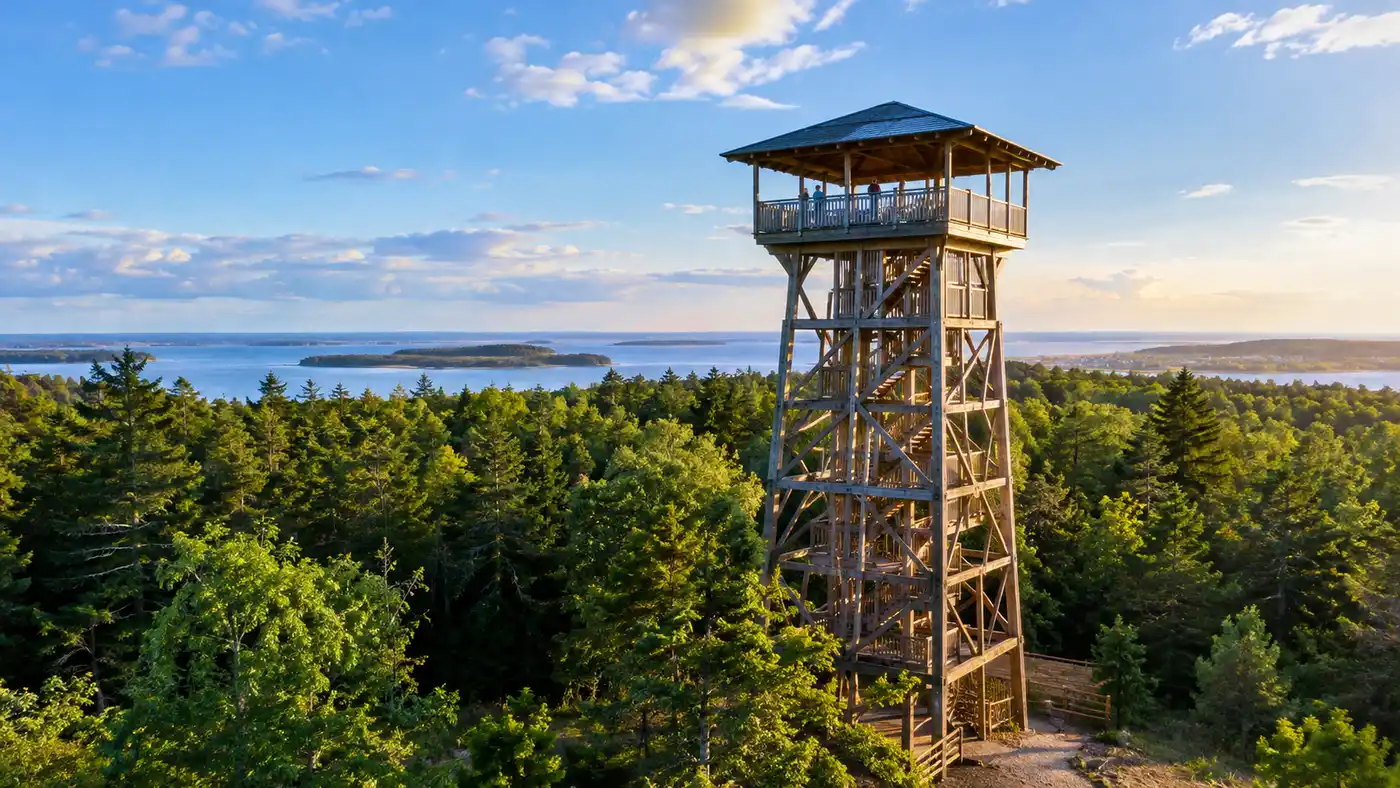
Wooden Observation Towers on Zealand and Across Denmark
Climbing through the damp canopy of Gisselfeld Klosters Skove on a brisk Tuesday morning changed how I look at Danish topography. You do not come to Denmark expecting dramatic elevation. Most of the countryside rolls quietly between wheat fields and beech stands, which is precisely why finding a well-designed trætårn sjælland feels like such an unexpected thrill. Instead of conquering a rugged mountain, you wind your way through the branches on a spiraling ramp of local oak, watching the horizon open up until you can see all the way across the Baltic waters to Sweden on a clear afternoon.
Over the past decade, Danish architecture has completely reinvented the humble forest lookout. What used to be rickety wooden blinds built strictly for duck hunters or birdwatchers have morphed into sculptural destinations that blend structural engineering with deep respect for old-growth timber. Whether you are hunting for a family day trip out of Copenhagen or mapping a broader road trip to visit every major wooden lookout across the islands and Jutland, here is everything you need to know about these soaring timber landmarks.
Book your forest tower denmark experience:
Camp Adventure: The Iconic Trætårn på Sjælland
The centerpiece of any talk about modern Danish lookouts is Skovtårnet, nestled deep in the woods near Rønnede. Designed by the Copenhagen-based studio EFFEKT, this hourglass structure rises 45 meters from the forest floor, though its observation deck actually sits roughly 140 meters above sea level due to the natural hill beneath it. If you want to know more about the structural dimensions, take a look at our breakdown of the Forest Tower height and architecture. The lattice frame uses weathering Corten steel wrapped around a walking surface built from untreated Danish oak planks sourced from nearby estates.
Walking it is surprisingly gentle. There are no clunky stairs to exhaust your knees. Instead, a continuous, spiraling ramp loops twelve times from the mossy base to the upper rim, wide enough for strollers and wheelchairs to pass without awkward nudging. You begin at the forest floor among damp ferns and fallen hornbeam leaves. Halfway up, you brush past ancient beech crowns where chaffinches dart between twigs. At the very top, the canopy drops away completely, revealing a panoramic spread of rolling South Zealand farmland and patches of ancient woodland.
Pro tip: Arrive roughly 45 minutes before sunset in mid-autumn. The low sun sets the rusted steel frame ablaze with deep orange light, and the usual midday crowds will have already packed into their cars for Copenhagen.
This distinct tårn sydsjælland is not just a standalone novelty either. It anchors Camp Adventure, an outdoor activity park featuring high-ropes courses strung through the trees and glamping yurts scattered across adjacent meadows. If you only have time to visit one major skovtårn sjælland during your trip to eastern Denmark, this is the one that justifies the detour every single time.
Comparing Major Towers: Zealand vs the Rest of Denmark
Zealand might boast the most famous timber structure, but the movement has swept across the entire country. Over on the west coast of Jutland, the Marsk Tower (Marsk Tårnet) challenges the sky in a totally different landscape. Designed by the Bjarke Ingels Group, it sits in the pancake-flat salt marshes of Skærbæk near the Wadden Sea. Instead of an hourglass nestled in deep woods, Marsk Tårnet looks like a coiled, twisting double helix made of raw steel and thick timber steps, standing 25 meters tall against relentless North Sea gusts.
Further north in central Jutland, near Mossø, stands the restored lookout at Klostermølle. It is far more modest than the big architectural showpieces, but it carries a wonderful historical weight, built near a centuries-old Benedictine monastery where drying timber was once an everyday craft. Across the country, you will encounter every flavor of tårn i danmark, ranging from multi-million-kroner tourist icons down to free community bird hides hidden along quiet coastal coves.
| Tower Name | Region | Height (Meters) | Walkway Type | Best Known For |
|---|---|---|---|---|
| Skovtårnet (Camp Adventure) | Zealand (Rønnede) | 45 m | Continuous ramp | Beech canopy views, Corten steel frame |
| Marsk Tårnet | South Jutland (Skærbæk) | 25 m | Staircase helix (with lift) | Wadden Sea panoramas, BIG design |
| Klostermølle Lookout | Mid Jutland (Skanderborg) | 14 m | Timber stairs | Historic lake scenery, bird watching |
| Avnø Naturcenter Tower | Zealand (Vordingborg) | 11 m | Internal wooden staircase | Spotted seal sightings along the fjord |
Visiting both major towers gives you a neat study in contrasts. Marsk Tårnet faces open horizon, tidal mud, and sea winds that make your jacket snap violently. Skovtårnet sjælland is protected, quiet, and wrapped entirely in the microclimate of mature hardwood trees. Honestly, I love both, but the Zealand woodland walk feels far more restorative if you need a break from city concrete.
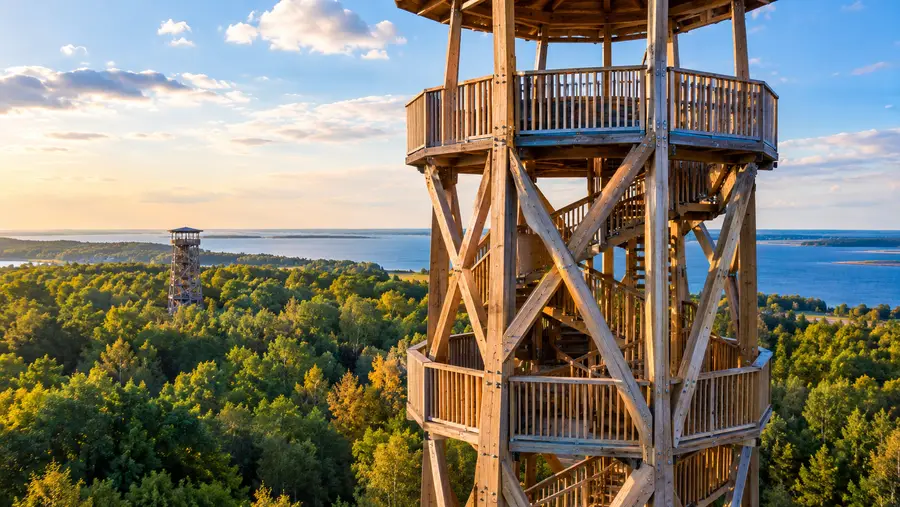
Why the Fascination with Every Trætårn i Danmark?
Denmark lacks natural summits. Our highest natural ground, Møllehøj, tops out at a modest 170.86 meters above sea level, and it looks like little more than a gentle pasture swell behind a quiet farm. You cannot hike up a granite ridge to get your bearings here. For generations, Danes who wanted perspective had to climb church spires, lighthouse lanterns, or water towers.
That landscape reality drove architects to invent new ways to look out over the country. While the bridge pylons on the Great Belt hold the title of the absolute højeste tårn i danmark, these recreation towers serve an entirely different human purpose. They are built specifically to put people into close contact with nature without trampling the delicate roots underneath.
- Eco-conscious construction: Most modern builds use untreated, certified Scandinavian or local timber that grays naturally under coastal weather, avoiding toxic chemical stains.
- Universal accessibility: Designers increasingly prioritize gradual winding ramps over steep wooden rungs, letting wheelchair users and young toddlers reach platforms that were once off-limits.
- Immersive forest paths: The journey begins long before the tower base, often using elevated wooden boardwalks that protect sensitive forest floors from foot compaction.
- Architectural ambition: Municipalities now treat a new udsigtstårn sjælland as an artistic monument rather than purely functional infrastructure.
You can see this shift everywhere. When a new tårn på sjælland is announced, town councils argue over silhouette, tree preservation, and footpath integration. The result is a collection of tårne i danmark that feel intentional and deeply rooted in their geography.
Book your forest tower denmark experience:
Planning a Day Trip to a Tårn Sjælland
Reaching these towers requires a tiny bit of planning since most sit tucked away in quiet rural reserves far from metro lines. If you are starting out from Copenhagen, heading down to South Zealand makes for a very smooth afternoon drive along the E47 highway. The trip takes roughly 55 minutes by car under standard traffic conditions. Public transit is doable, though you will need to catch a regional train to Næstved or Haslev followed by a local bus, which runs somewhat infrequently on Sundays. If you want the full route breakdown, read our guide on how to visit Forest Tower from Copenhagen before setting off.
Note: Parking at Camp Adventure requires a paid digital registration, which costs around 65 DKK if not booked alongside your tower entry pass. Always verify your license plate at the kiosk before heading out into the woods.
Weather plays a massive role in what kind of view you get. In late autumn, heavy sea fogs often roll across Zealand, clinging to the valleys. If you climb through the damp chill, you might emerge at the top platform into brilliant sunshine, looking out over a sea of white mist with only distant church steeples poking through. In the dead of summer, the dense foliage turns the climb into an emerald tunnel where you smell damp bark and sweet sap the whole way up.
Footwear matters less than you might think on the ramp towers. Because the oak decking is smooth and gentle, comfortable sneakers or walking shoes are perfectly fine. You do not need stiff leather mountaineering boots unless you plan on tackling the muddy dirt tracks deeper inside Gisselfeld Klosters forest after your climb.
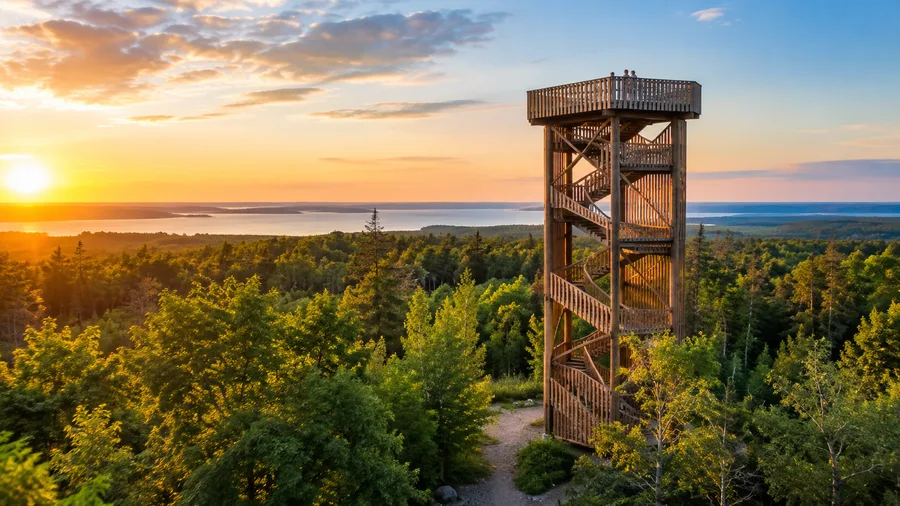
Lesser-Known Nature Towers and Viewpoints Across Zealand
While everyone talks about the big timber spiral near Haslev, dozens of smaller observation platforms hide across Zealand. Many of these require no admission tickets, offering silent retreats for morning birders, sketching enthusiasts, or anyone seeking quiet hours away from crowds. They might not have glossy gift shops or boutique cafes, but their simplicity is lovely.
Out on the Avnø peninsula along the southern coast, a converted former military airfield features an observation post rebuilt with clean timber panels. From the top railing, you can train a spotting scope across the shallow waters of the fjord. Harbor seals haul themselves onto the sandbanks there to warm up during low tide, completely unbothered by hikers watching through binoculars.
Head further north toward Roskilde Fjord or into the marshlands of Bøllemosen in Jægersborg Hegn, and you will find low-rise wooden platforms anchored directly into peat moss. These spots let you hover inches above black water and carnivorous sundew plants without getting your boots muddy. Here are three things worth packing if you plan on hunting down these smaller timber towers:
- Compact binoculars: An 8x32 or 8x42 pair works wonders across the wide salt marshes and reed beds surrounding Zealand fjords.
- Windproof jacket: Even on balmy spring afternoons, climbing 15 to 40 meters up exposes you to steady, biting breezes off the Baltic.
- Thermos of black coffee: Danish picnic culture revolves around a hot drink on a cold wooden plank while watching birds circle the bay.
Finding an unheralded wooden lookout on a quiet shoreline often leaves a deeper impression than paying admission to a marquee attraction. There is something grounding about climbing timber steps that creak slightly in the wind, looking across flat meadows where roe deer graze in the reed grass.
Frequently Asked Questions about trætårn sjælland
What is the most famous trætårn sjælland has to offer?
The most famous one is Skovtårnet at Camp Adventure, located in South Zealand near Rønnede. It stands 45 meters tall and features an hourglass-shaped Corten steel frame with an oak ramp winding all the way up through the forest canopy.
Can you visit a wooden tower in Denmark with a stroller or wheelchair?
Yes, Skovtårnet was designed specifically with universal access in mind. The spiraling ramp has a very gentle 7.5 percent gradient with flat rest zones throughout, making it fully accessible for strollers and wheelchairs, though some rustic bird towers across Denmark still rely on narrow steps.
How long does it take to walk up and down Skovtårnet?
The leisurely walk from the reception area along the raised boardwalk, up the spiral ramp to the viewing platform, and back down typically takes between 1.5 and 2 hours at an easy strolling pace.
Quick Reference
- Forest Tower height: 45 meters (140 m above sea level)
- Location: Rønnede, South Zealand (55 minutes from Copenhagen)
- Marsk Tower location: Skærbæk, South Jutland
- Accessibility: Stroller and wheelchair friendly via gentle ramp
- Best seasons: May for green canopy, October for autumn colors
Book your forest tower denmark experience:
Before You Go
Denmark proves that you do not need towering peaks or jagged alpine passes to create unforgettable vantage points. The humble trætårn sjælland landscape has evolved into an inspiring showcase of what happens when world-class architects collaborate with local forestry craft. Pick a crisp, clear morning, grab your favorite warm jacket, and climb above the Danish beech trees - you will come down looking at this flat country in an entirely new light.
Read more about forest tower denmark.