Camp Adventure Climbing Park: Denmark's Largest Treetop Course
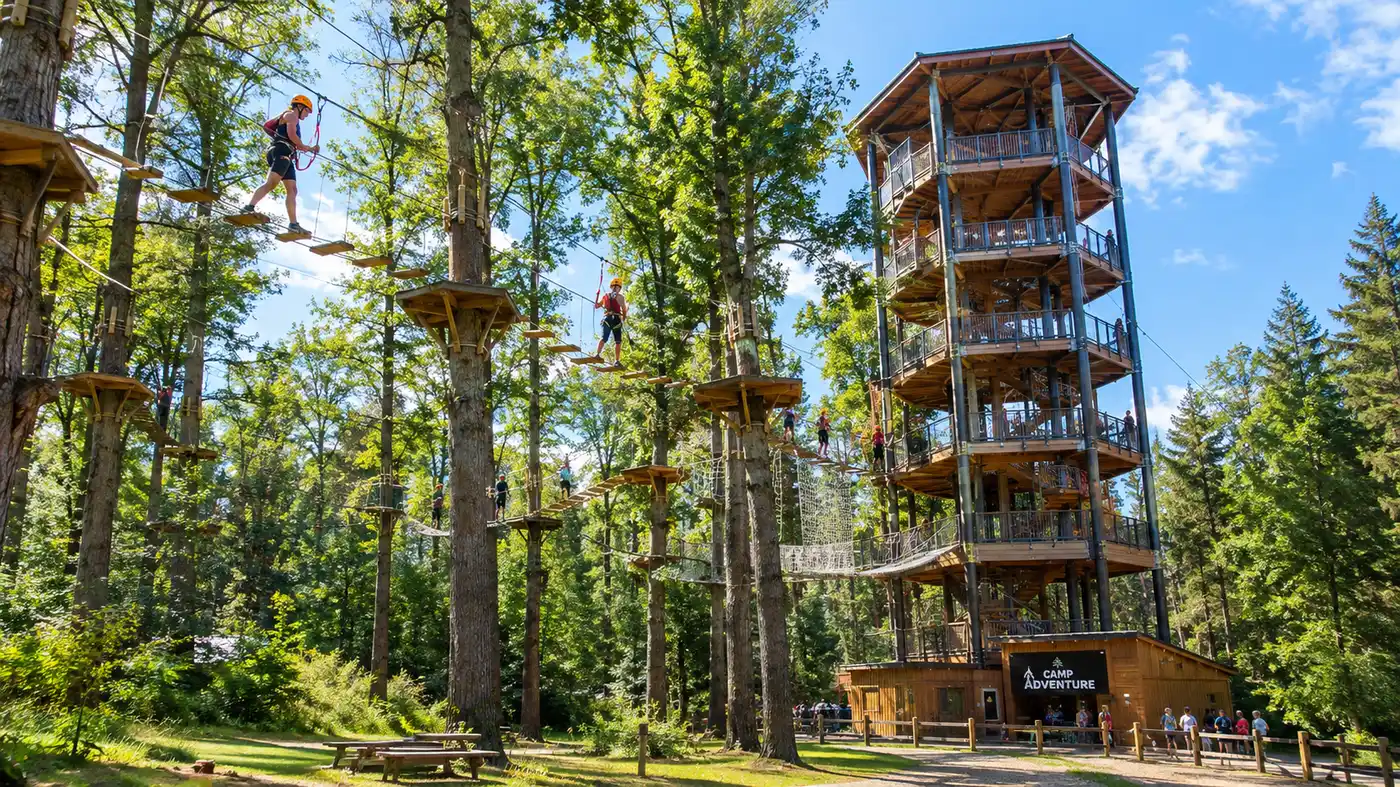
My forearms were burning before I even reached the fifth platform on the blue circuit. High above the forest floor in the beech woods of southern Zealand, the gentle sway of the trunk under my boots made it clear this was no sanitized city playground. The camp adventure klatrepark spreads across a massive stretch of protected woodland near Haslev, and it feels wild. You hear the sharp clatter of safety carabiners, the occasional nervous laugh cutting through the leaves, and the long, humming whine of pulleys screaming down wire cables.
Most people associate this corner of Denmark with the spiraling wooden tower that put the valley on Instagram, but the climbing park was here first. It opened back in 2013 and gradually expanded into the largest aerial adventure park in Scandinavia. If you are planning a trip to tackle the treetops yourself, you need to know how the courses run, what kind of stamina they demand, and how to pace your day without ending up stranded on a wire platform shaking with adrenaline.
Book your forest tower denmark experience:
Inside the Treetops: The 12 Courses
The woods here hide 12 distinct courses running across several kilometers of wire rope and wooden obstacles. When you look up from the forest trails, you barely spot half of them. The platforms are built into the living beech trees, hung at heights ranging from just 1.5 meters off the dirt all the way up to 25 meters in the canopy. It makes this place distinctly different from other spots like a typical klatrepark sjælland build, where courses are often bunched tightly together over flat ground.
The layout follows a progressive color code: yellow, light green, dark green, blue, red, and black. Yellow is essentially a playground for young kids and hesitant beginners, hovering close enough to the soil that parents can walk alongside without needing a harness. By the time you step onto the red courses, the mood changes fast. You find yourself straddling swinging logs, hauling your own body weight across suspended cargo nets, and balancing on single steel wires with nothing to grab except a pair of slack guide ropes.
The black course is genuinely tough. I watched a very athletic guy in his twenties stall on the vertical rope ladder for ten minutes before taking the drop into the safety net. You should not underestimate it. The park instructors will tell you straight out that reaching the black course is not a requirement for having fun. Plenty of people spend four hours looping through the three green courses and the blue runs, coming away thoroughly exhausted and happy.
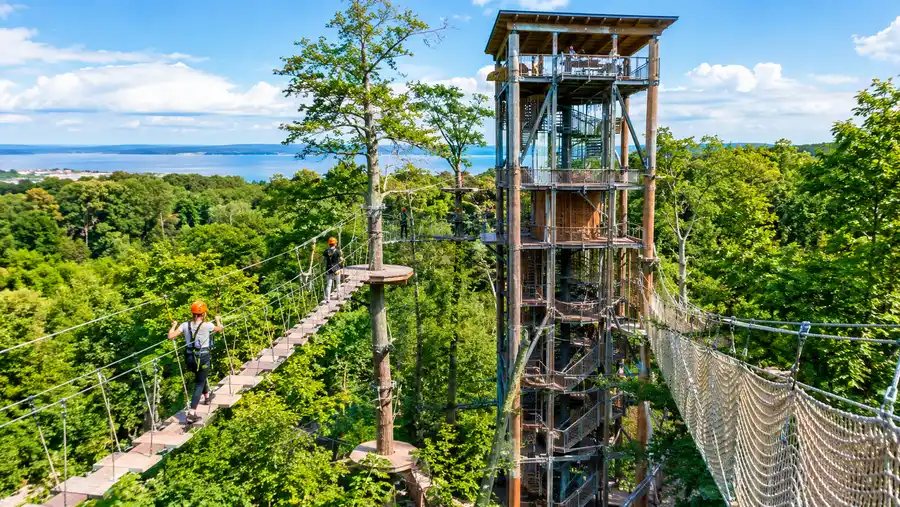
If you have climbed at smaller facilities, perhaps checking out a klatrepark næstved setup or a klatrepark nordsjælland venue, the sheer physical footprint here is what catches you off guard. You are genuinely out in the deep forest. The leaves muffle highway sounds, and down below, hikers wander along the footpaths on their way to the tower, completely unaware you are dangling twenty meters above their heads.
Pro tip: Start on a course one tier below your estimated skill level. The fatigue builds in your forearms and calves much faster than you anticipate, especially if you grip the safety lanyards too tightly on your first hour.
Course Breakdown and Difficulty Levels
Every course has its own rhythm and personality. Some prioritize balance, while others demand raw upper-body pulling strength. You get fitted with a harness at the base camp, walk through a mandatory fifteen-minute ground school, and then you are free to pick your own route.
The table below breaks down the twelve courses by their height, general challenge level, and typical obstacle types so you can plan where to spend your energy.
| Course Name / Color | Minimum Height Requirement | Platform Elevation | Primary Obstacle Types | Physical Intensity |
|---|---|---|---|---|
| Yellow (Courses 1-2) | 110 cm | 1.5 to 3 meters | Low bridges, stable planks, mini zip lines | Gentle |
| Light Green (Courses 3-4) | 110 cm | 3 to 6 meters | Swinging walkways, barrel tunnels, gentle wires | Moderate |
| Dark Green (Courses 5-6) | 130 cm | 5 to 10 meters | Stirrup bridges, balance beams, climbing walls | Moderate-Plus |
| Blue (Courses 7-8) | 130 cm | 8 to 15 meters | Hanging logs, slack lines, high wire steps | Demanding |
| Red (Courses 9-10) | 140 cm | 12 to 20 meters | Rope ladders, cargo nets, Tarzan swings | Strenuous |
| Black (Course 11) | 150 cm | Up to 25 meters | Free-hanging stirrups, overhangs, vertical drops | Very Strenuous |
| Zip Line Course (Course 12) | 130 cm | 10 to 18 meters | Consecutive long-distance zip line glides | Moderate (Height Heavy) |
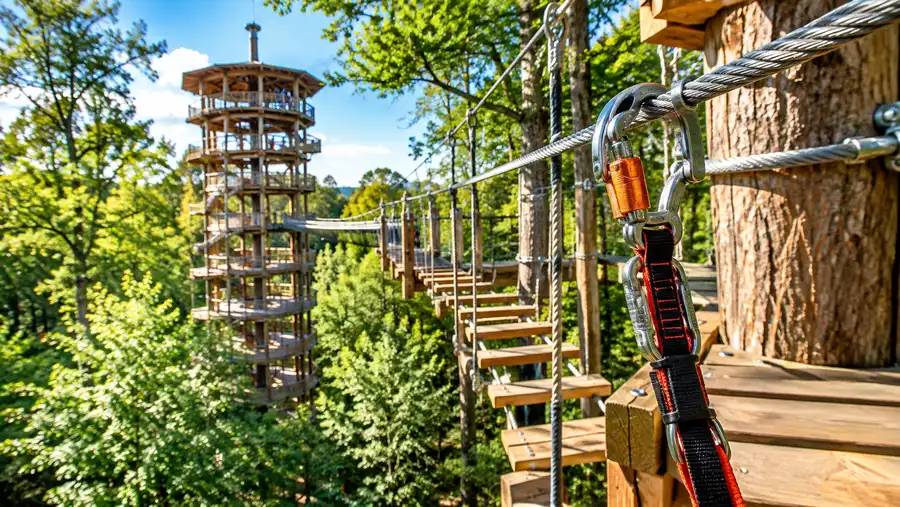
What I appreciate about the setup is that you never feel forced into something dangerous. Camp adventure park uses a continuous belay system. You hook your roller onto the lifeline wire before leaving the solid wooden staircase, and that mechanism cannot be detached until you reach the ground at the far end of the run. It eliminates the old two-carabiner human error problem where you could accidentally unclip both hooks at once.
That safety margin gives you mental room to focus on your footwork. When you step out onto a suspended timber beam swinging on loose chains, your brain wants to panic. Knowing that you are physically tethered to a certified steel cable that holds several tons makes all the difference.
The Camp Adventure Svævebane Experience
For a lot of visitors, the obstacles are just the price of admission to reach the zip lines. The camp adventure svævebane network is woven into nearly every route, but course twelve is the crown jewel. It features Denmark's longest zip line, spanning close to 480 meters across open forest clearings and a tranquil pond.
Standing on that launch platform is quiet. You wait your turn, clip your twin pulleys onto the overhead cable, pull your knees up, and step straight into empty space. The first two seconds give you that sudden stomach-drop sensation. Then the wind hits your face, the cable sings against the steel wheels, and you are flying over the forest canopy at roughly 50 kilometers per hour.
You glide over a mirror-like lake where the water reflects the clouds, watching the treetops peel away beneath your boots. It takes almost a full minute to cross the longest gap. Toward the finish platform, the cable rises gently and you slide through a thick wood-chip runout bed designed to absorb your remaining momentum. It is addictive. You immediately want to climb the access ladder and repeat the glide, though getting back requires hiking through the undergrowth to the launch stairs again.
The shorter zip lines scattered throughout the red and blue circuits have their own charm. Some dump you into massive cargo nets where you have to grab the rope webbing with your fingers and toes like an uncoordinated spider before scrambling up to the wooden deck. If you lose your grip, you hang in your harness until you can haul yourself back up, which burns your core muscles quickly.
Note: Wind can occasionally shut down the longest zip lines for safety reasons. If gusts exceed the park's operational limits, instructors will close course twelve while keeping the lower, forest-sheltered circuits open.
Book your forest tower denmark experience:
What to Wear and Pack for a Day in the Canopy
Climbing through deep woods is messy work. Tree sap covers the bark, steel cables leave black grease on your palms, and the harness belts will rub against thin fabric. You do not want to show up in stylish clothes or flat tennis sneakers with slick soles.
- Gloves: Sturdy work gloves or cycling gloves with leather palms are essential to protect your knuckles from cable friction and sharp wire splices. You can buy cheap pairs at the ticket desk for around 35 DKK if you forget yours.
- Footwear: Lace-up trail shoes or light hiking boots with grippy tread will save your ankles on wet logs. Running shoes work fine, but avoid anything with smooth, worn-out soles.
- Pockets: Zip-close pockets only. Anything loose in an open coat pocket will fall out twenty meters up, and finding a smartphone in thick leaf litter is nearly impossible.
- Hair and jewelry: Long hair must be tied back low so it does not tangle in the zip pulleys. Take off rings and dangling necklaces before strapping into your harness.
- Weather layers: Wind feels much colder when you are standing still on an exposed platform waiting for the person in front of you to clear an obstacle. Dress in flexible layers you can peel off.
I left my backpack in the car during my first visit, which was a mistake. You can bring a small daypack, but it catches on safety cables and throws your center of gravity off when squeezing through barrel crawls. The best move is using the open storage shelves near the instruction zone or leaving your food and extra gear locked in your vehicle until your climbing window ends.
Practical Details: Camp Adventure Klatrepark Priser and Booking
Getting into the trees requires booking a time slot online beforehand, particularly on summer weekends and public holidays. Walk-in slots exist, but they sell out early. When planning your budget, take a look at the current Forest Tower tickets, prices and opening hours because climbing passes and tower admissions are priced separately, though combo tickets can save you some money.
Typical camp adventure klatrepark priser hover around 370 to 410 DKK for adults, with tickets for children between seven and fourteen running roughly 270 DKK. The ticket covers your harness rental, helmet, initial safety instruction, and roughly four hours of total course access. That four-hour block is generous. In reality, most casual climbers tap out after two and a half hours because of physical exhaustion.
Finding the site is easy if you are driving down the E47 highway. The park sits right on the boundary between Haslev and Rønnede, tucked down Denderupvej. If you need navigation help, check out the guide on Forest Tower address and how to find Camp Adventure. Parking on-site costs around 55 DKK for the day, managed through automatic number-plate cameras, so make sure to settle the fee at the payment machines near the main reception before driving off.
- Arrival timing: Aim to show up roughly 25 minutes before your scheduled climbing slot to check in, use the restrooms, and get your harness fitted without rushing.
- Weight limits: The safety harnesses have a strict maximum weight threshold of 120 kilograms.
- Age boundaries: Kids can climb from age seven, but children under twelve must be accompanied on the courses by a paying adult. One adult can supervise up to two young climbers.
- Food options: There is a seasonal courtyard with food stalls serving burgers, coffee, and fries, but the picnic tables scattered outside the climbing zone are free to use if you pack your own rye bread and thermoses.
If you are camping or road-tripping around Zealand, this haslev klatrepark base makes a logical stop. It sits halfway between Copenhagen and the chalk cliffs of Møn. It is far enough south that it draws people searching for klatrepark rønnede excursions, but accessible enough that day-trippers from the capital make the hour-long commute regularly.
Frequently Asked Questions about camp adventure klatrepark
How long does the climbing session last?
Standard tickets grant four hours of access, including the mandatory 15-minute safety instruction. Most visitors complete between three and five courses in that timeframe before arm fatigue sets in.
Can you do both the climbing park and the Forest Tower on the same day?
Yes, though it makes for a long, physical outing. If you want to do both, climb in the morning when your energy is fresh, eat lunch in the courtyard, and take a slow walk out along the boardwalk to the tower in the afternoon.
What happens if I get stuck or scared on a course?
Trained instructors patrol the ground beneath the courses throughout the day. If you freeze up or simply run out of strength, they carry evacuation kits and can lower you safely down to the ground within a few minutes.
Are gloves required to climb?
They are not strictly mandatory by park rules, but they are practically essential. The steel cables and rough ropes will tear up your hands after two hours without palm protection.
Quick Reference
- 12 courses spanning from 1.5 to 25 meters high
- Longest zip line measures roughly 480 meters
- Session length is four full hours
- Minimum climber age is 7 years
- Located off E47 near Haslev and Rønnede
Book your forest tower denmark experience:
The Bottom Line
High ropes parks can sometimes feel like mechanical tourist traps, but this one works because it respects the forest it lives in. There is genuine drama when you stand on a small platform twenty meters up in a 150-year-old beech tree, listening to the wind rattle the branches while you figure out where to place your feet next. If you have the stamina for it, skip the tour buses, strap on a harness, and spend a morning swinging through the Danish canopy.
Read more about forest tower denmark.